Number of Certified Certifications in Indonesia
XXX Hectares in Indonesia

peta indonesia

IFCC Photo Contest 2020: Exploring the Beauty of Indonesian Forest Virtually Through Lens

Forest is a very important natural resource that we must protect so that living things in and around the forest can continue to breathe fresh and clean air. Not only that, forest also produces various materials that can be used by other living things. Apart from having various benefits, forest also has fabulous beauty. Enjoying the beauty of the forest by exploring it directly is indeed very interesting and fun, but since in 2020 the world is being hit by the global pandemic of COVID-19, then the exploration of the forest beauty can be done by utilizing the technological sophistication. Yes, for the time being we are enjoying the beauty of the forest in a virtual way, by seeing the photographers’ masterpiece through their lens captures.


In 2020, PEFC was holding their 4th PEFC Photo Contest. As do not want to be left behind, IFCC also participated by holding it nationally, known as the IFCC Photo Contest 2020. "Forest Through Lens with IFCC" is the theme of the IFCC Photo Contest in 2020. Just like previous years, this photo contest was started on the World Earth Day, 22 nd April 2020 and was closed on the World Environment Day, 5 th June 2020. The IFCC photo contest was held to tell people about the beauty of Indonesia's forest and build a higher level of community attention and concern for forest and everything in them. This year IFCC received 1,517 photos, which is higher number than last year. Lots of photographers have managed to capture the beauty of Indonesia's forests very nicely!

From west to east, from Sumatra to Papua, it is no longer impossible for all of us to see the beauty of Indonesia's forests. Thank you to all of the contestants who have participated in this photo contest by being willing to show their masterpieces to the public so that we can enjoy the beauty without having to leave our house. After going through a rigorous judgement and a long process, the judges finally succeeded choosing the best 5 photos as the winners of the IFCC Photo Contest 2020. Below are the masterpieces of the winners and their respective profiles!

The Winners

1_resize.jpg

Photo of 1st Winner: The beauty of Walakiri Beach

This photo was taken by Ismail Abd. Muttalib, the 1 st winner of IFCC Photo Contest 2020. He captured the beauty of mangrove trees located in Walakiri beach, East Nusa Tenggara. According to Ismail, the mangrove trees that grow on this beach are unique because the mangrove branches that are not straight tend to twist, like a dancing tree. This tree, known as the dancing tree, will be seen when the sea water is receding.

Ismail has been doing photography for 5 years. He has also won several photography competitions, including 1 st place in the Aerial Photo Competition (2017), 3 rd place in the World Habitat Day Photo Contest (2017), and winner of the Indonesian Colorful Photo Competition (2018). Ismail participated in the IFCC Photo Contest 2020 to gain more experience in photography so that he can work more in the world of photography, and become a winner in international contests. He also hopes that his work can inspire everyone about the importance of preserving forests.

2_resize.jpg

Photo of 2nd Winner: The Beauty of Waerebo Tropical Forest

“Waerebo is a small village located about 1,100 meters above sea level, where the air is really cold and the village is surrounded by beautiful mountains and Todo dense forests. This tropical forest is rich in vegetation, where you will find orchids, ferns and hear the chirping of many kinds of birds." That's what Sofyan Efendi said, describing the photo he took in Waerebo village, Manggarai, Flores, East Nusa Tenggara.

Sofyan has been a photographer for 20 years. By participating in this photo contest, Sofyan wants to show the natural beauty including forest in Indonesia including its biodiversity to the public. Sofyan has been actively following IFCC's growth through his participation in the IFCC photo contest since 2018. The good fortune was upon him in the last two years since at the IFCC Photo Contest 2019, Sofyan was selected as the 1 st winner and this year Sofyan has successfully achieved the top 5 again by winning 2 ndplace at the IFCC Photo Contest 2020.

3_resize.jpg

Photo of 3rd Winner: Kedung Kayang Waterfall

Kedung Kayang Waterfall which is located in Mount Merapi National Park (Wonolelo Village, Sawangan, Magelang, Central Java) was captured by Ady Agustian, the 3 rd winner of the IFCC Photo Contest 2020. Ady said that the use of Kedung Kayang waterfall as a tourist spot had received permission from the local Perhutani with the aim of improving the economy of the community around the waterfall while the local communities are obliged to protect the environment and the existing natural resources. 

The beauty of Kedung Kayang waterfall can be enjoyed both from the top of the waterfall and from under the waterfall. Ady said that to enjoy the beauty of the waterfall, it requires a journey of about 30 minutes along the Pabelan river basin which is quite challenging so it is better not to do it during the rainy season as it is dangerous.

Ady has been a photographer for 17 years. He started photography, which has become his hobby since 2003. One of Ady's goals to participate in this photo contest is to channel his hobby of photography. He hopes that this kind of contest shall be maintained in the future in order to encourage people to grow a sense of love for nature.

4_resize.jpg

Photo of 4th Winner: Morning Activity

This photo was taken by Chairil, the 4 th winner of the IFCC Photo Contest 2020. Chairil has been a photographer for 11 years. He is very grateful to live in an area that still has many forests that can be captured in photographs. One of them is the forest in Mount Gede Pangrango National Park, Sukabumi, West Java, which has a lake named Situ Gunung. This lake provides a great view in the morning, as in the photo he took.

The natural beauty of Situ Gunung is well known to foreign countries. Some foreign tourists, especially photographers, can sometimes come to that place where they take part in capturing the beauty of the morning atmosphere at Situ Gunung. According to Chairil, if we want to capture the natural beauty of Situ Gunung, you should come in the morning between 06:00 and 09:00 WIB. The atmosphere that is harmonious between nature and the activities of residents who are looking for fish in this location is very beautiful moment to be captured.

By participating in this photo contest, Chairil felt very happy because he could show the natural beauty of Indonesia through the photos he took. He hopes that this photo contest will be the way for PEFC and IFCC to grow a sense of care and love for forests to the community.

5_resize.jpg

Photo of 5th Winner: Dancing Mangrove in Walakiri

This photo showing the beauty of mangrove trees dancing in Walakiri amidst a beautiful sunset has succeeded in bringing Giri Wijayanto to become the 5 th winner of the IFCC Photo Contest 2020. Mangrove trees on Walakiri Beach, East Sumba, East Nusa Tenggara are endemic to Sumba Island. Its unique shape resembles a silhouette of a dancing person making the local community call it "Dancing Mangrove".

Through this photo contest, Giri wants to spread information about the beauty of the natural environment in Indonesia so that public will recognize it more and then love and care for it. 

Photography has been his hobby for the last 8 years. Giri is very enthusiastic in participating to this photo contest as it has spurred him to explore the natural beauty of Indonesia more and more widely.

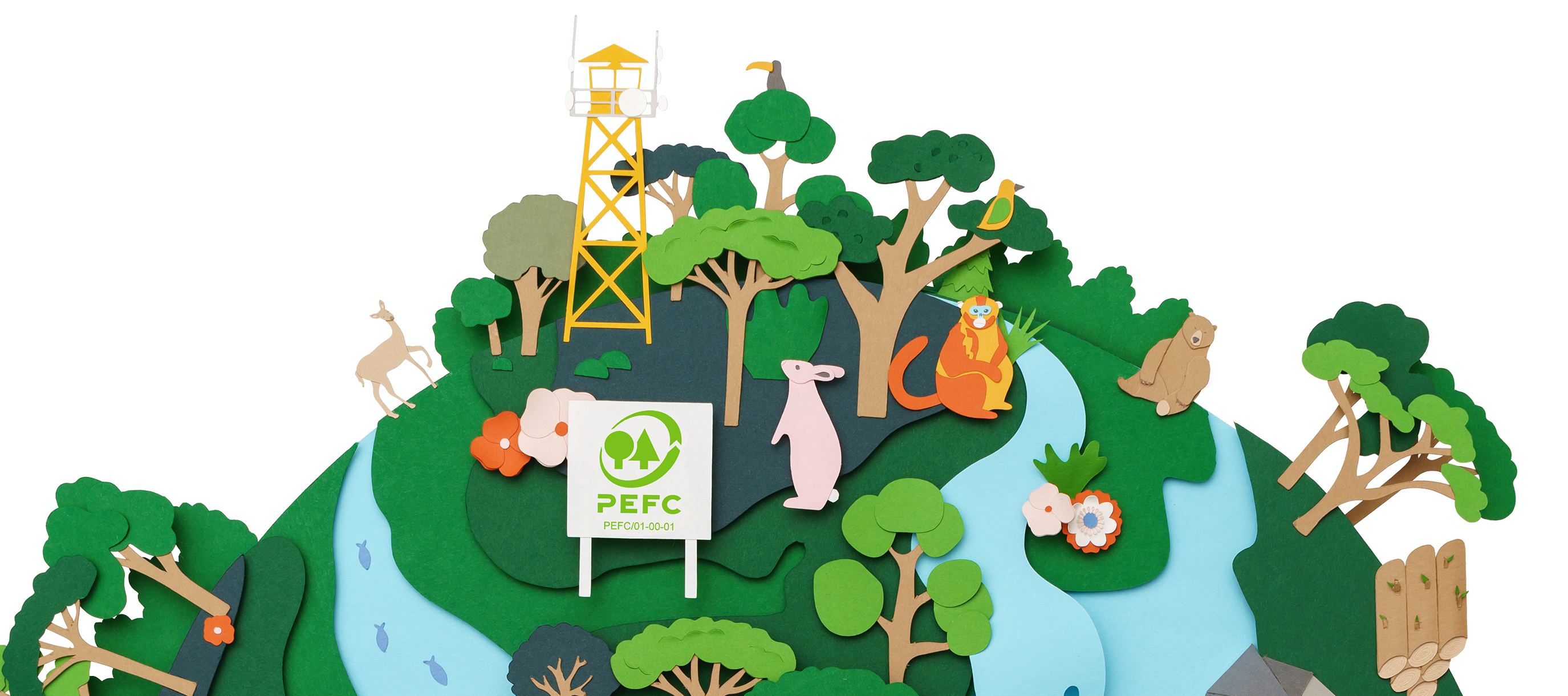
Fashions change, Forests stay

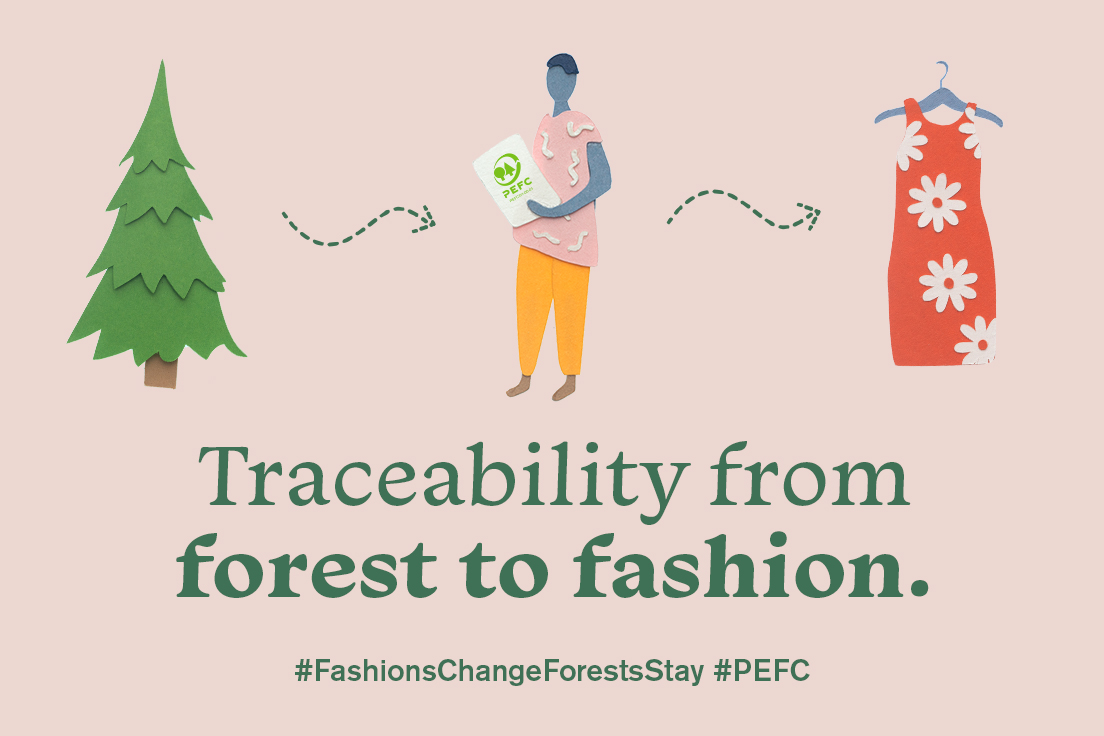
Fashion follows the seasonal cycle of nature, at the same time, its environmental impact is well known. As climate change and other environmental issues worsen globally, the industry is looking to replace its conventional materials with sustainable alternatives. Forests are part of the solution.

Natural and renewable forest fibres have a huge potential to make the fashion industry more sustainable. But the origin of these fibres is critical and must be proven. This is where PEFC and sustainable forest management comes in, protecting our forests and the people that depend on them, while providing us with the materials needed to create our clothes.

Video credits:
Paper Artist - www.sampierpoint.com
Photographer and Animator - www.mikefoyle.com/photo

Forests' contribution to our planet

Our forests are amazing. They help mitigate climate change, maintain water quality and stabilize soil, provide food and livelihoods to millions of people and are home to an extraordinary amount of biodiversity. Forest products meanwhile, provide us with a carbon-neutral alternative to fossil fuels – from construction to clothing. But we need to manage our forests sustainably. 

Download our white paper to read how sustainable forest management can help the fashion industry reduce its carbon footprint.

The PEFC solution

PEFC sustainable forest management certification provides assurances that forests are managed in line with challenging international requirements, safeguarding them and protecting their diverse functions. It requires certified forest owners to manage their forests in a way that maintains or enhances the ecological, social, cultural, and economic values of the forest. 

PEFC chain of custody certification then provides the link, tracking forest-based products from these forests to the final product, monitoring each step of the supply chain through independent third- party auditing. It also covers minimum requirements on health, safety and labour issues. 

By sourcing PEFC-certified materials, you not only have assurance of their sustainable origin, but you also contribute to the sustainable management of the world’s forests. Building trust in forest products supports sustainable livelihoods, helps to build responsible value chains, and increases the value of forests. In turn, increasing their value helps to keep forests standing, preventing them from being cleared for alternative, unsustainable land uses.

Why you should procure certified material

There are numerous benefits of ensuring that you procure PEFC-certified material, for both your business and the planet. 

It gives you the assurance that your procurement of forest fibres doesn’t contribute to deforestation or forest degradation, as well as helping you to meet climate targets. In addition, maintaining forests and creating sustainable forest value chains is critical for achieving the UN Sustainable Development Goals.

Ethical consumption is on the rise, as market research has repeatedly shown over the past years. Being able to demonstrate your commitment to sustainability is therefore a clear market advantage. Sourcing PEFC-certified material proves your social and environmental responsibility to the public and your customers.

PEFC-certified material is widely available. 75% of the world's certified forests are under PEFC certification – around 320 million hectares. Using PEFC-certified material therefore enables you to secure your supply of responsibly sourced material and increase your business resilience. 

Over 20,000 companies worldwide, including major fibre suppliers, hold PEFC chain of custody certification, ensuring there is a wide variety of PEFC-certified products and materials available on the market.

Procuring PEFC-certified material also means increased efficiency and flexibility through a consistent and stable supply chain, as well as enhanced measuring and reporting of volume of certified forest materials in the supply chain.

The PEFC Collaboration Roadmap – five steps by 2025

Fashion brands and retailers have a huge opportunity to help champion and support the sustainable management of the world’s forests, bringing benefits to you, our forests and the world. We invite you to join us and work together to make the most of this opportunity.

To help, we have created a five-step road map to a sustainable forest management policy. This roadmap can also be easily connected and complimented by your other viscose-related polices on chemicals or water use. 

  1. Engage with PEFC to learn more about how sustainably managed forests store carbon, protect biodiversity, support rural communities and support the fashion industry.
  2. Develop a responsible sourcing policy for wood-based fibres and other wood-based materials – from clothing to packaging and point of sale.
  3. Map your supply chain and collaborate to implement procedures that trace wood-based products back to origin to ensure they are sustainable.
  4. Increase your sourcing of wood-based products from sustainably managed forests and recycled sources and set ambitious targets to achieve 100% sourcing from certified sustainably managed forests.
  5. Collaborate with PEFC and our global network of 750,000 forest owners, from the large to the small, to meet your environmental goals through projects that protect and restore forests.

Join PEFC!

The time to increase your positive impact is now. Together we can make a difference for the future of the fashion industry, our forests and our world.This email address is being protected from spambots. You need JavaScript enabled to view it.?subject=Five-steps%20by%202025">

This email address is being protected from spambots. You need JavaScript enabled to view it. and work together to promote sustainable management of the world’s forests.

Documentation

Source: https://pefc.org/what-we-do/our-collective-impact/our-campaigns/fashions-change-forests-stay


Issue PEFC recognized accreditations

As an accreditation body you play an important role in assuring the independence and performance of certification bodies issuing PEFC certificates.

You may have been requested by a certification body to provide an accreditation against a PEFC endorsed forest management standard and/or the PEFC Chain of Custody standard. Having a PEFC accreditation program enables you to provide services to certification bodies seeking to carry out PEFC certification in your country.

We only accept accreditations from ABs that are members of the International Accreditation Forum (IAF), or one of the regional accreditation groups such as the European co-operation for Accreditation (EA) of the Pacific Accreditation Cooperation (PAC).

We then have specific additional requirements, depending on the type of certification for which the accreditation is provided.

For forest management certification, our PEFC endorsed national forest certification systems will include specific performance requirements based on our Technical Document Annex 6. This includes for example the public availability of summary audit reports and stakeholder consultations in the certification process.

For PEFC chain of custody certification, the certification body will need to comply with our PEFC ST 2003. Additionally, your AB needs to be a signatory of the Multilateral Recognition Agreement for product certification (MLA). PEFC ST 2003 provides all technical details for the accreditation.

To find out more, please contact us at This email address is being protected from spambots. You need JavaScript enabled to view it..

Training requirements

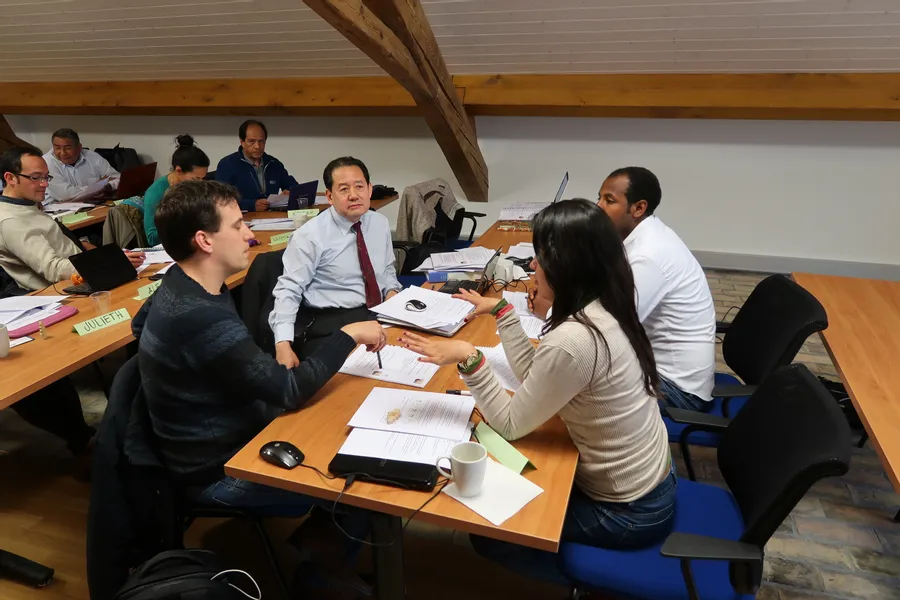
As you are assessing the performance of certification bodies issuing PEFC certificates, it is important to have sufficient expertise on the PEFC system and the PEFC Chain of Custody standard within the assessment team. We find it equally important that, like the auditors, you are kept up to date on our expectations, clarifications and interpretations to the standard.

Many accreditation bodies have solved this by using external technical experts with proven knowledge of the PEFC standard. Others have ensured that their personnel received sufficient training. 

We offer different options to have your personnel or technical experts trained. As a first option they could attend an auditor training course. A second possibility is to send them to one of the dedicated accreditation body trainings that we organize periodically.

Technical calibration training for accreditation bodies

In January 2020, we published the revised international standards for PEFC Chain of Custody (ST 2002), PEFC Trademarks (ST 2001) and Certification Body Requirements for Chain of Custody (ST 2003). These three standards entered into force on 14 February 2020, with a 24-month transition period.

In order to support accreditation bodies, we are offering technical calibration training to update your representatives on the key changes to these three standards. This technical calibration aims at providing you with the technical background necessary to conduct your accreditation tasks. 

You can find all the upcoming training for accreditation bodies on the training section of our website. Make sure you sign up to our newsletter (at the bottom of this page) to ensure you get all the latest training news and dates, or follow us on Twitter.

You can also contact us for more information at: This email address is being protected from spambots. You need JavaScript enabled to view it..


Promote your sustainable material

If you are sourcing PEFC-certified products, you need to tell your customers about it! You can do this through the PEFC label. As a brand owner or retailer, there are several options for how you can use the PEFC label.

With the publication of our 2020 standards, we made it easier for brands and retailers to use our PEFC label to promote their procurement and sale of PEFC-certified products. 

With our previous standard, if you wanted to highlight your products were PEFC certified, you needed to include the PEFC licence number of each individual supplier. With the 2020 standards, this is no longer necessary. See the next section to see how you can do this!

Highlighting your certified products

If you procure PEFC-certified finished products and sell these finished products directly to consumers, without manipulating them in any way, you can use the PEFC label indirectly on‑product for promotional purposes. To do so, you simply need to hold a PEFC trademarks usage licence for Group D users (see how to get this at the bottom of the page).

This is designed to help you make it easy for your customers to identify your PEFC-certified products within catalogues, brochures and prices lists (digital or paper based). You need to clearly place an off-product label with the message “The products marked with the PEFC trademarks can be provided as PEFC certified” and then can put the PEFC label next to all your PEFC-certified products.

The aim of this process is to make it easier for you as a retailer to demonstrate to your customers which of your products are PEFC certified, without needing to use the specific licence number of every supplier. To find out exactly how you can use the PEFC trademarks in this way, see clause 6.3.4.4 of the PEFC Trademarks standard.

https://cdn.pefc.org/pefc.org/media/2020-02/d1ad5a21-0267-4db4-a41b-07fd577ffdea/3abf07e8-b7f9-5f42-ba2a-9ca608ee415f.pdf

Promoting your responsible sourcing

You can use the PEFC off-product label to enhance your communication about your responsible sourcing, including on your website, annual and CSR reports, marketing materials, catalogues and brochures and in-store materials. It's important to note, that this label cannot be used to claim that products are certified.

To help promote your sale of PEFC-certified products to your customers, you have a range of off-product label messages to choose from:

  • Promoting Sustainable Forest Management
  • [Company name] offers PEFC certified products
  • By sourcing PEFC, [we/company name] are/is supporting sustainably managed forests globally
  • By sourcing PEFC [wood/paper/packaging/products][we/company name] are/is supporting sustainably managed forests globally
  • The PEFC logo on our products ensures that our [wood/paper/packaging/products] comes/come from sustainably managed forests, recycled and controlled sources. Every purchase of a PEFC-labelled product makes a difference for forests and forest communities across the world.

You can also use these messages without the label, under the same requirements. When using them, you must either have the PEFC label close to the message, or put your trademarks licence number next to the message.

Putting the PEFC label on your products

If want to use the PEFC trademarks on products you are producing under your brand, you need to be PEFC certified in order to ensure they comply with the PEFC requirements. 

If your products are produced by third parties, then your suppliers need to be PEFC certified and label the finished products with their PEFC trademarks licence number.

Only PEFC certified companies can use the PEFC trademarks directly on-product. For more information, please check the PEFC label and how to get certified sections of our website or contact us at This email address is being protected from spambots. You need JavaScript enabled to view it..

Accessing the labels

You can create off-product labels using the PEFC Label Generator. Your account will automatically give you the label messages suitable for your business. You can also give your designers access to your Label Generator account, so they can directly download the labels to use within your promotional materials, catalogues, etc. 

To get access to the Label Generator you need to get a PEFC trademarks usage licence by signing a PEFC trademarks usage contract. If you already have a trademarks usage licence, you may need to sign a new contract, or accept an amendment to your current contract. But don’t worry, your PEFC trademarks licence number won’t change. 

Get in touch

To find out more, or to request a trademarks usage licence, please contact the national PEFC member for your country. If you’re country isn’t on the list, please contact PEFC International at This email address is being protected from spambots. You need JavaScript enabled to view it.

source: https://pefc.org/for-business/brands-and-retailers/promote-your-sustainable-material

How to get PEFC chain of custody certified

To earn PEFC chain of custody certification, you must develop and implement procedures to account for the purchasing, tracking, manufacturing, sale and recordkeeping of certified materials.

We base PEFC chain of custody certification on best practice guidelines for certification. We use globally accepted ISO guidelines to ensure independence, transparency and impartiality of the certification process.

Preparing for certification

Which certification is right for you?

First, you’ll need to determine the scope of your certification. Which products do you want to sell with a PEFC claim or label? Are you looking at certifying a one-off project? What parts of your organization carry out chain of custody activities? Does your organization have chain of custody activities in multiple locations?

You can decide on the exact scope of your certification and we provide several tailored certification solutions if necessary, such as individual, multi-sitegroup or project certification.

Check the PEFC Chain of Custody standard version

In January 2020, PEFC published the latest versions of the PEFC Chain of Custody (ST 2002) and PEFC Trademarks (ST 2001) standards. These standards entered into force on 14 February 2020, with an 24-month transition period. This means that until 14 February 2022, there are two versions of the PEFC Chain of Custody standard: the latest version from 2020 and the older version from 2013. At this time, it is possible to be certified against either standard version.

Before starting to fulfil the PEFC chain of custody requirements, you need to choose which standard version you wish to be certified against. When making this decision, please take into consideration that certification bodies cannot provide certification services for the latest version until they have trained their auditors and adapted their procedures.

Fulfil the requirements

In order to obtain PEFC chain of custody certification, you need to fulfil certain key requirements.

Your management system outlining procedures must comply with the PEFC International Chain of Custody standard (PEFC ST 2002). You can integrate this information into the existing systems your company may have already implemented, such as ISO 9001 or ISO 14001 procedures.

You need to identify, brief and train the personnel responsible for performing the tasks that will affect the implementation and maintenance of the chain of custody; this includes buyers, marketing and sales personnel, among others. It is vital to ensure that everyone involved has appropriate knowledge of the purpose and requirements of chain of custody certification.

You will need to implement the necessary checks to verify that sourced material is PEFC certified – production of certified goods requires procurement of certified material. Our online database is a good resource for identifying suppliers of certified material.

You must implement processes to ensure that you have separated the production or handling of certified goods from non-certified goods, and that you have accurately accounted for the certified content in a product that contains both certified and non-certified material. Proof may be required at any stage of the process. You also need to keep records to prove that all systems comply with the requirements.

You will then have to conduct periodic reviews of your system and internal audits on an annual basis. These internal audits are in addition to external third-party audits.

The certification process

Once you have gone through all the preparatory work and set up your chain of custody system, you are ready to apply for PEFC certification.

The certification body

First, find a PEFC-recognized certification body in your country and get in contact with them. You can search for certification bodies using our online database. You will need to make an application for chain of custody certification with the certification body of your choice. 

If you have set up your chain of custody system in line with the requirements from the 2020 Chain of Custody standard, ask your chosen certification body if they are able to offer certification against this standard. Due to the 24-month transition period, some certification bodies may not yet be able to offer this certification.

Based on this application, you will receive a proposal, including a cost estimate. Certification bodies set the cost of PEFC chain of custody certification, so prices may vary by country and certification body. Most certification bodies establish their fees based on the time needed to carry out the audit. Audit time depends on a number of variables, including company size and complexity of the chain of custody. This averages between half a day and two days.

The audit

Arrange for the certification body to assess your chain of custody system against the Chain of Custody standard, checking that you have fulfilled all requirements. This will include a site visit by auditors from the certification body to assess your compliance. 

As part of the normal auditing process, the certification body may identify aspects of your chain of custody that may not comply with the requirements of the standard. Before granting you the certification, the certification body will request you to solve them within certain period of time.

The certificate

If the certification body finds your chain of custody system to be compliant with the certification requirements, they will issue you a PEFC certificate. The certificate is valid for a period of maximum five years. During that time, the certification body will carry out annual surveillance audits to confirm that your operation continues to comply with chain of custody requirements.

In order to renew your certification upon expiry of the certificate, you will be required to undergo a re-certification audit.

source: https://pefc.org/for-business/supply-chain-companies/how-to-get-certified